
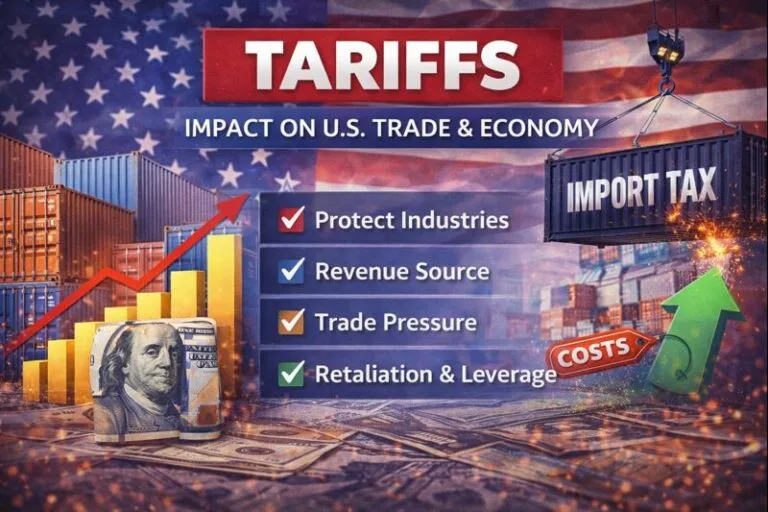
Tariffs are taxes or duties imposed on imported goods and services. They are one of the most widely used tools in international trade policy. Governments use tariffs to protect domestic industries, raise revenue, and regulate trade. While tariffs can benefit local businesses, they also affect consumer prices, global supply chains, and international relations. Understanding tariffs is essential for businesses, policymakers, and consumers alike.
What Are Tariffs?
A tariff is a tax placed on imported goods. When a government imposes a tariff, the price of foreign products increases, making locally produced goods more competitive. Tariffs serve multiple purposes:
- Protect domestic industries from foreign competition
- Generate government revenue
- Control trade deficits
- Influence the consumption of foreign products
Tariffs can be specific (a fixed fee per unit, e.g., $5 per imported car) or ad valorem (a percentage of the product’s value, e.g., 10% of a smartphone’s price).
History of Tariffs
Tariffs have a long history in global trade:
- U.S. Tariff of 1828 – nicknamed the “Tariff of Abominations,” it sparked political tension between northern and southern states.
- Smoot-Hawley Tariff Act (1930) – raised tariffs on thousands of imported goods, which contributed to a worsening of the Great Depression.
- Modern Trade Wars – recent U.S.-China tariffs highlight the continued relevance of tariffs in geopolitical strategy.
Historically, tariffs have been both a source of domestic economic protection and international conflict.
Types of Tariffs
Tariffs can be classified into four main types:
- Protective Tariffs – Shield domestic industries from foreign competition.
- Revenue Tariffs – Designed to generate government income.
- Countervailing Tariffs – Imposed in response to unfair foreign subsidies or dumping.
- Retaliatory Tariffs – Applied in reaction to another country’s trade restrictions.
Each type has different economic and political implications, depending on the country’s objectives.
How Tariffs Affect the Economy
1. Consumer Prices
When a tariff increases the cost of imported goods, consumers pay more. This can reduce purchasing power and limit access to affordable products. For example, tariffs on imported electronics may make smartphones and laptops more expensive.
2. Domestic Industries
Tariffs can benefit local manufacturers by reducing foreign competition. They can also stimulate job growth in protected sectors, as companies expand production to meet domestic demand.
3. Trade Relations
Tariffs can strain international relations. Countries often respond with retaliatory tariffs, leading to trade disputes or trade wars, as seen in the U.S.-China trade war of 2018–2020.
4. Global Supply Chains
Global companies often rely on imports for raw materials. Tariffs can disrupt supply chains, increase production costs, and lead companies to shift sourcing to avoid high tariffs.
Examples of Tariffs in Action
- U.S.-China Trade War (2018-2020) – tariffs on $360 billion in goods caused disruptions in global trade and raised costs for American businesses.
- European Union Agricultural Tariffs – protect EU farmers from cheap imports, stabilizing prices and production.
- Steel and Aluminum Tariffs – used by countries like the U.S. to strengthen domestic metal industries.
These examples show how tariffs are used both as economic tools and political leverage.
Advantages of Tariffs
- Protects Domestic Jobs – shields local industries from foreign competition.
- Encourages Local Production – stimulates economic growth and industrial development.
- Raises Government Revenue – provides funds for public spending.
Disadvantages of Tariffs
- Increases Consumer Prices – imported goods become more expensive.
- Can Trigger Trade Wars – retaliation from other countries can hurt exporters.
- Hinders Global Supply Chains – increases production costs for multinational businesses.
Tariffs and Trade Policy Today
Tariffs remain a critical tool for governments in shaping trade policy. They are used not only to protect industries but also to negotiate trade agreements and enforce labor or environmental standards. Modern tariffs often target strategic sectors like technology, steel, and agriculture.
Policymakers must balance the protective benefits of tariffs with their potential to increase consumer costs, strain international relations, and disrupt markets.
Frequently Asked Questions (FAQs)
Q1: What is a tariff?
A tariff is a tax on imported goods, designed to make foreign products more expensive and support domestic industries.
Q2: How do tariffs affect consumers?
Tariffs increase the price of imported products, which can make everyday items more expensive for consumers.
Q3: What is the difference between tariffs and quotas?
Tariffs are taxes on imports, while quotas limit the quantity of goods allowed into a country.
Q4: Can tariffs lead to trade wars?
Yes, retaliatory tariffs can escalate tensions, resulting in trade disputes and market volatility.
Q5: Are tariffs still relevant today?
Absolutely. Countries use tariffs to protect industries, regulate trade, and negotiate international agreements.
Conclusion
Tariffs are a powerful but double-edged tool in global trade. They protect domestic industries, generate government revenue, and influence international relations. However, they can raise consumer prices, disrupt supply chains, and spark trade conflicts. Understanding tariffs is essential for businesses, consumers, and policymakers to navigate today’s global economy effectively.
References
- World Trade Organization – Tariffs: https://www.wto.org/english/tratop_e/tariffs_e/tariffs_e.htm
- Investopedia – Tariffs Explained: https://www.investopedia.com/terms/t/tariff.asp
- Congressional Research Service – Trade Policy: https://crsreports.congress.gov/product/pdf/R/R46987
- Britannica – History of Tariffs: https://www.britannica.com/topic/tariff