What Is CPI? (Consumer Price Index Explained)
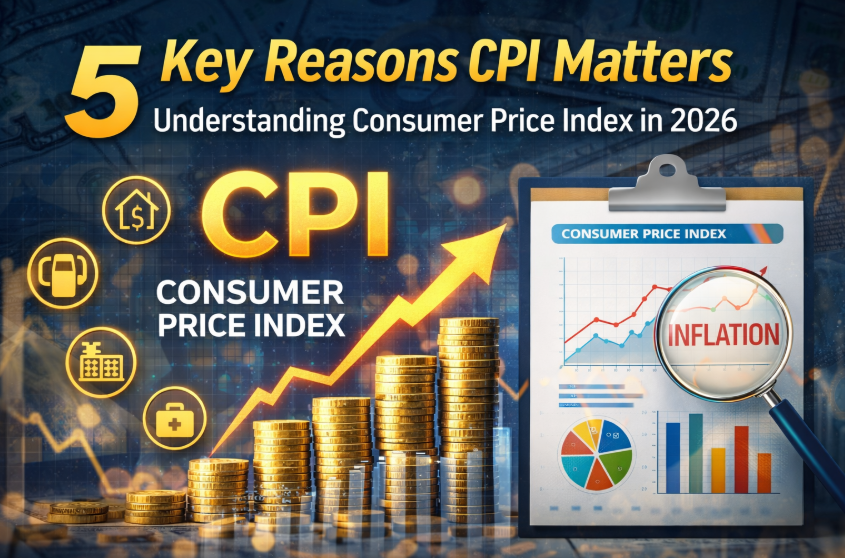
The Consumer Price Index (CPI) is a way to tell how prices of goods and services change over time. It shows whether an economy is growing or shrinking, and many governments, investors, and businesses use it to make choices about the economy.
- Purpose: Keep an eye on the cost of living
- Government statistical agencies, like the Bureau of Labor Statistics in the US and the ONS in the UK, put out these reports.
- Effect: helps with decisions about money policy, pay raises, and investments
How Is CPI Calculated?
CPI is figured out by looking at how the prices of a set group of goods and services change over time.
Step-by-Step CPI Calculation:
- Select a market basket – Includes food, housing, transportation, healthcare, and education.
- Track prices – Measure current prices against base year prices.
- Calculate CPI –
CPI=Cost of Basket in Base YearCost of Basket in Current Year×100
- Analyze inflation rate –
Inflation Rate (%)=CPI Last YearCPI This Year – CPI Last Year×100
Why CPI Matters
CPI is very important for many people:
- Government and central banks: change interest rates and monetary policy.
- Businesses: Set prices for goods and negotiate pay.
- Investors: Gauge inflation and adjust portfolios.
- Consumers: Understand changes in cost of living and purchasing power.
For example, if the CPI goes up, that means prices for goods and services are going up, which means inflation is high.
CPI vs. Core CPI
- CPI: Looks at everything in the basket, like food and energy.
- Core CPI leaves out things that change a lot, like food and energy, to show the underlying trends in inflation.
CPI Around the World
| Country | Latest CPI (Annual %) | Source |
|---|---|---|
| United States | 4.6% | BLS.gov |
| United Kingdom | 3.2% | ONS.gov.uk |
| India | 6.0% | MOSPI |
| Eurozone | 5.1% | Eurostat |
Note: CPI varies regionally, impacting local monetary policy and living standards.
How CPI Affects Your Money
- Inflation: When the CPI goes up, the cost of living goes up and your buying power goes down.
- Salaries: Wages often adjust based on CPI (Cost of Living Adjustments).
- Interest Rates: Central banks may increase rates to combat high CPI.
- Investments: CPI influences bond yields, stock markets, and commodity prices.
How CPI Influences Investments and Financial Markets
CPI is one of the most closely watched economic indicators by investors. Rising CPI often signals higher inflation, which can affect bond yields, stock prices, and commodity markets. For example, when CPI rises faster than expected, central banks may increase interest rates to control inflation. This can raise borrowing costs for companies, impacting stock valuations. On the other hand, moderate CPI growth can be a sign of a healthy economy, providing a favorable environment for long-term investments. Understanding CPI trends allows investors to adjust portfolios, hedge against inflation, and make strategic decisions in both equities and fixed-income markets.
CPI and Everyday Life: Why It Matters to Consumers
CPI affects more than just governments and investors; it also has a direct effect on how people live their lives every day. When the CPI goes up, things like groceries, gas, rent, and health care cost more. This makes money less valuable, which means that a family may have to spend more to live the same way. On the other hand, if the CPI is steady or low, people can keep or improve their way of life without having to worry about prices going up quickly.
A lot of companies and employers also use the CPI to change pay and wages so that workers can keep up with inflation. People can make smart financial decisions, plan for future expenses, and budget well if they know what CPI is. Find out more U.S. news on Newsaxee. Learn More U.S related News on Newsaxee
Frequently Asked Questions (FAQs)
Q1: What is a good CPI?
Most economies think that a stable CPI of around 2% is healthy because it keeps growth and inflation in check.
Q2: How often do you hear about CPI?
Most countries report the CPI once a month or once a quarter.
Q3: Are taxes included in CPI?
Yes, sales taxes and VAT are both included in the CPI basket of goods and services.
Q4: Is CPI the same thing as inflation?
CPI looks at how prices change, while inflation looks at how prices rise in general.
Q5: What effect does CPI have on interest rates?
To control inflation and economic growth, central banks change interest rates based on changes in the CPI.